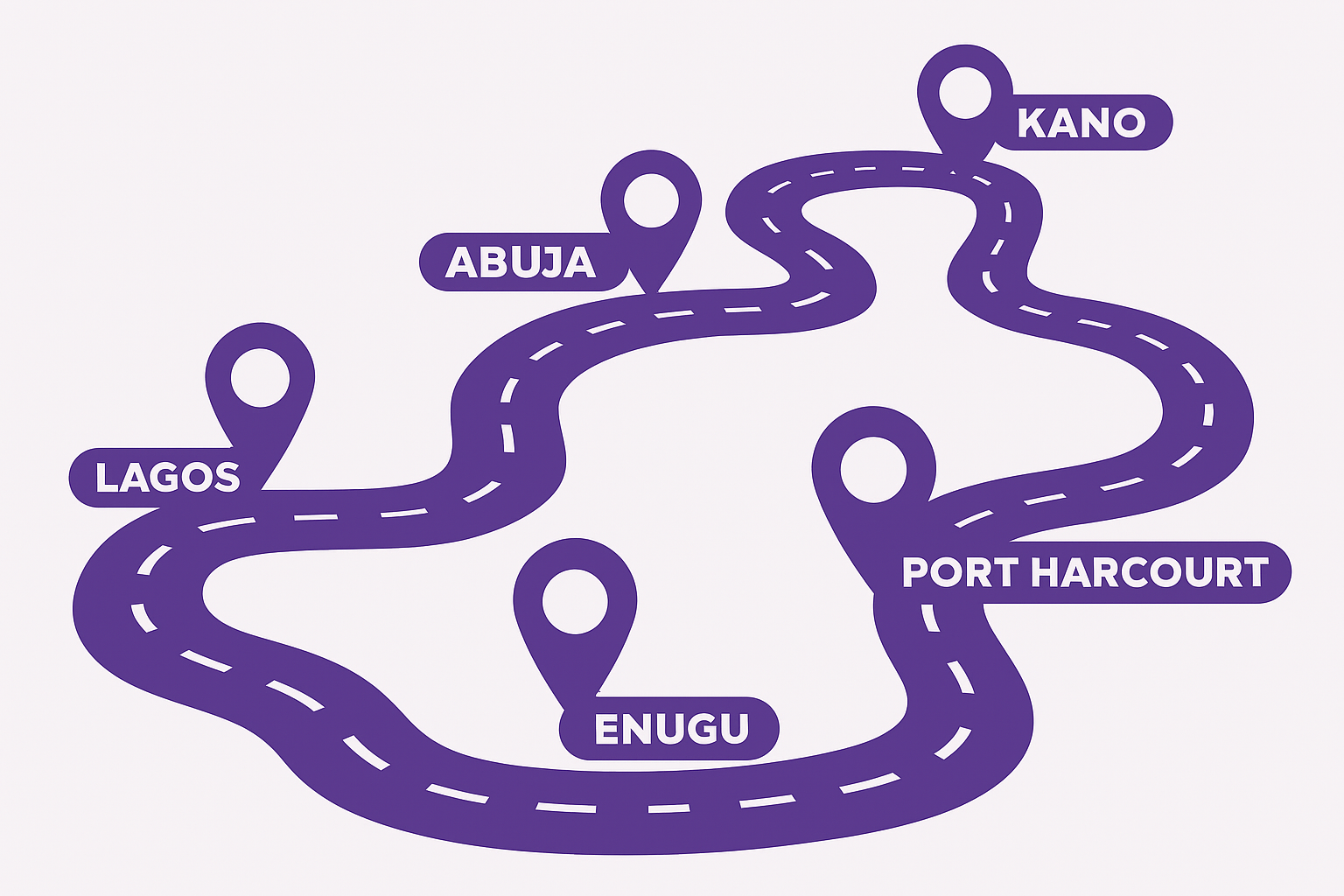
Safest Routes to Major Cities in Nigeria — Backed by WillSafe Intelligence
Traveling between Nigeria’s major cities can be rewarding —Safest Routes to Major Cities, markets, culture, business and family ties pull millions of people across the country every week. But road travel in Nigeria also carries real risks: theft, kidnappings, violent attacks in some corridors, and frequent, sometimes deadly, traffic accidents. The route you pick, the time you travel, and the intelligence you use can make a huge difference.
This guide explains:
- What current reporting shows about risk on Nigeria’s most-used corridors.
- How WillSafe Intelligence analyzes live signals and community reports to recommend the safest route at any given time.
- Practical, actionable route and trip planning advice for moving between major cities (Lagos, Abuja, Port Harcourt, Benin, Enugu, Ibadan, Kaduna and more).
- A step-by-step pre-trip checklist and in-trip behavior guide to reduce exposure.
Important note: security on Nigerian roads changes quickly. This guide uses recent reporting to highlight hotspots and likely risk patterns, but always check live WillSafe Intelligence alerts (or local official sources and news) immediately before you leave.
1) What the evidence says now — hotspots you should know about
Below are the main corridors frequently cited in reputable reporting as having elevated risk for kidnappings, attacks or severe crashes. These are not meant to scare you — they are to help you choose safer options and timings.
- Abuja–Kaduna / Kaduna axis — This corridor has been the site of large abduction incidents and armed attacks in recent years. Past reporting documented mass abductions on stretches of the Kaduna–Abuja highway. Punch Newspapers
- Port Harcourt–Warri / Port Harcourt corridor — Multiple analyses and reports in 2024–2025 flagged the Port Harcourt–Warri route as one of the country’s high-risk corridors for kidnappings and attacks. Businessday NG
- Benin–Akure / Benin–Ore routes — There have been repeated reports of passenger abductions on the Benin–Akure and Benin–Ore highways, including recent December incidents. These are active flashpoints that merit caution. The Guardian Nigeria+1
- Lagos–Ibadan Expressway — While it is Nigeria’s busiest interchange and a major economic route, the Lagos–Ibadan Expressway is also the site of frequent, sometimes fatal, traffic crashes — a safety hazard for travellers. The Guardian Nigeria
- General coastal and southern hotspots — BusinessDay and other monitoring sources have identified some southern and coastal corridors (including parts of the Niger Delta and Edo State routes) as increasingly dangerous due to criminal activity and localized violence. Businessday NG+1
Beyond these corridor-level reports, national monitoring agencies and rights groups document ongoing insecurity across many states (killings, kidnappings and clashes) that feed into roadside risk. The National Human Rights Commission and local reporting show high levels of violent incidents in some months of 2025. Nigeria Rights
What this means: some corridors are consistently riskier than others. But risk is dynamic: a road that was safe last week can become hazardous after an ambush, a protest, or a road closure. That’s why live, verified updates matter more than static route advice.
2) How WillSafe Intelligence works — Safest Routes
WillSafe Intelligence is designed to be the safety layer between travellers and risk. Here’s a plain-language outline of the system and why it helps:
Inputs WillSafe Intelligence uses
- Verified news and official alerts — news reports, police statements, verified local agency notices. (We surface these automatically for users when relevant.) Punch Newspapers+1
- Community signals — driver- and rider-submitted verified reports (geotagged), local sighting reports, and safe/unsafe pickup flags. These are moderated and cross-checked.
- Pattern detection from historical incidents — repeated incidents on a corridor increase its risk score until conditions change or authorities intervene.
- Traffic and crash feeds — when crashes or fuel tanker incidents cause long standstills, WillSafe flags those as hazards. (Many serious incidents occur because heavy vehicle crashes cause fires and mass casualties.) AP News
- Security partner intelligence — where available, WillSafe integrates tips/updates from vetted security partners (private security, community vigilantes, local police liaison channels).
What WillSafe Intelligence produces
- Dynamic route safety score (0–100) for each possible route between two points, updated in real time.
- Time-based risk advisories (e.g., “avoid Lagos–Benin between 21:00–05:00 due to confirmed attacks”) — shown in the rider/driver app.
- Alternative route suggestions that prioritize passing through more-patrolled towns, better lighting, and higher vehicle flow.
- Safe pickup / droppoint recommendations — publicly accessible, well-lit hubs (hotels, police stations, large fuel stations) that reduce vulnerability.
- Proactive push alerts to drivers and riders if a trip’s route moves into a rising-risk zone while underway.
Why this is valuable: instead of static “this road is dangerous,” WillSafe gives real-time, contextual recommendations that let travellers reroute, delay, or pick safer meeting points. It’s the difference between general worry and precise action. WillSafe Security Reports – WillSafe Drive Nigeria
3) Safe-travel planning: principles-driven route selection for major city pairs
Below are practical planning recommendations for common inter-city trips. Because the situation changes, each section pairs static context (what the reporting says) with WillSafe Intelligence guidance (how to act now).
A. Lagos ⇄ Ibadan / Oyo State (Lagos–Ibadan Expressway)
Context: Lagos–Ibadan is the busiest corridor in South-West Nigeria. It carries enormous commuter and commercial traffic, and also records high numbers of crashes and severe incidents. Recent monitoring singled it out for high accident volumes. The Guardian Nigeria
Risks: heavy traffic, frequent accidents involving tankers and trailers, and opportunistic criminality during long stoppages.
WillSafe guidance
- Prefer daytime travel between 07:00–16:00 when visibility, repair/tow response and patrol coverage are best.
- Use official rest/call hubs — park and meet at major fuel stations or toll plazas (they are usually well-lit and staffed).
- If you stop, keep passengers inside the vehicle and choose a public, lit area.
- Check live traffic and incident alerts; WillSafe will flag major crash hotspots that could be targets for highway criminals due to stalled traffic.
B. Lagos ⇄ Abuja (Long-distance trunk linking South to Centre)
Context: This cross-country link traverses multiple states and sections of the route have different security profiles. The Abuja–Kaduna stretch has had major incidents; some southern stretches report elevated criminality. Punch Newspapers+1
Risks: prolonged exposure across many states, variable security coverage, and the possibility of ambushes in rural zones.
WillSafe guidance
- Break long trips into daytime legs only; overnight highway travel multiplies risk exposure.
- Plan stopovers in large, secure towns with established police presence and reliable accommodation (book in advance).
- Prefer routes that pass through state capitals or more populous towns rather than long, remote stretches; those places have better security resources.
- Watch for WillSafe-issued corridor advisories — if a stretch shows rising risk, the app will propose a longer but safer variant (e.g., through larger towns or different federal highways).
C. Benin ⇄ Akure / Benin–Ore corridor
Context: This corridor has seen repeated kidnappings and organized attacks; the most recent high-profile incidents in late 2025 reinforce that certain stretches can be hazardous. The Guardian Nigeria+1
Risks: targeted abductions, ambushes near smaller villages, and sporadic violent incidents.
WillSafe guidance
- Avoid isolated pick-ups and drop-offs in unlit villages — choose designated town centres or fuel stations.
- If you must travel here, travel in convoy where possible (two or more vehicles) and travel during daylight.
- Enable live trip sharing (share your trip status with emergency contacts and WillSafe’s safety team) — WillSafe will flag significant movement or stoppages and issue alerts if suspicious behaviour is detected.
D. Port Harcourt ⇄ Warri / Niger Delta routes
Context: Analysts and reports have marked the Port Harcourt–Warri route as a prominent hotspot due to criminal gangs and complex local dynamics, making this corridor high-risk at times. Businessday NG
Risks: organized criminality, kidnap for ransom, roadblocks staged by criminal groups, and occasional violent exchanges.
WillSafe guidance
- Use vetted drivers who have logged multiple safe trips on WillSafe and display a safety badge.
- Prefer group transfers or licensed intercity services if available (WillSafe can surface partnered fleet operators).
- Confirm route and checkpoints with WillSafe before departure — the system will recommend avoidance of known hotspots and suggest alternate urban routes that pass through more secure towns.
E. Abuja ⇄ Kaduna
Context: This expressway has had large, headline-grabbing abductions reported in past years. While security operations are frequently active, the corridor remains sensitive because of sporadic attacks. Punch Newspapers+1
Risks: mass abduction, ambushes, and targeted attacks in remote stretches.
WillSafe guidance
- Avoid overnight travel on this corridor.
- When possible, travel in groups or buses with vetted security arrangements.
- Use WillSafe’s safe-drop hubs — some stations and designated hubs have local security liaison points and are recommended as pickup/drop points.
4) Practical on-road safety rules every traveller should follow (WillSafe-recommended)
Whether you’re a rider, driver, or group traveller, these are simple, evidence-based rules that reduce exposure during travel: WillSafe Security Reports – WillSafe Drive Nigeria
- Travel daytime whenever possible. Most incidents and criminal opportunities occur at night. (This is consistently supported by incident reporting patterns.) The Guardian Nigeria
- Choose pickup/drop points in busy, lit locations (fuel stations, malls, police posts, certified hotels). WillSafe highlights these in the app.
- Share your live trip with a trusted contact and the WillSafe safety team; automatic check-ins reduce response time if something goes wrong.
- Keep luggage inside the vehicle and do not stand outside alone near isolated stretches.
- Avoid altering your route to satisfy unknown requests from third parties — if a driver suggests a “shortcut” that goes through small settlements at night, question it.
- Document the driver and vehicle details before boarding — name, vehicle number, and face (WillSafe’s app displays verified driver badges).
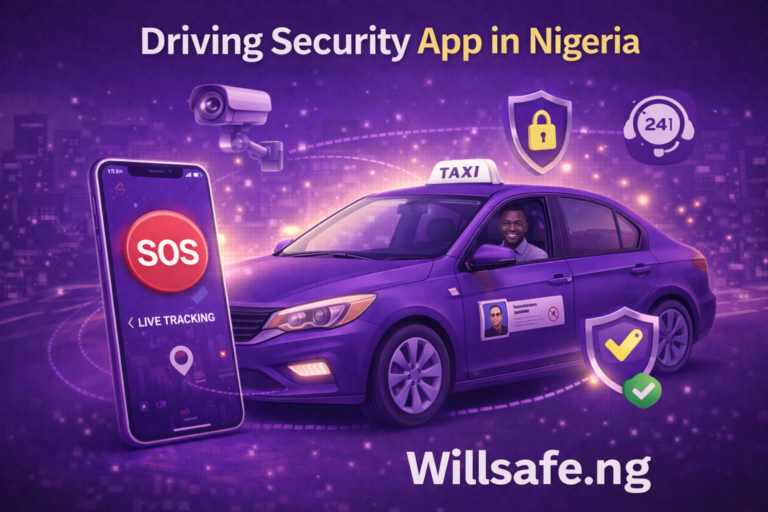
- Use WillSafe’s instant SOS & verification features — they send your location to the safety team and pre-nominated emergency contacts.
- If stopped unexpectedly, keep doors locked and ask for ID from anyone claiming to be “security” until you verify.
- In remote stoppages, avoid stepping out alone; wait in public, lit places.
5) How to pick the safest route at booking time — step-by-step using WillSafe
When you plan a trip using the WillSafe app, follow these steps:
- Enter origin and destination. WillSafe computes multiple route options with a safety score attached.
- Look at the route safety score and alert icons. The app shows “green/yellow/red” safety levels and reasons (e.g., “recent abduction reported 40 km ahead”). The Guardian Nigeria
- Tap for alternatives — choose a slightly longer route that passes through larger towns or official hubs if the shortest route is flagged.
- Choose a pickup point recommended by WillSafe (leverage fuel station or hotel pick points).
- Share trip details with at least two emergency contacts and enable live tracking.
- If the route’s risk changes mid-trip, WillSafe pushes an alert and suggests re-routing or stopping at the nearest safe hub. Follow the instruction — do not try to negotiate or continue blindly.
6) For drivers and fleet operators — operating safer in risky corridors
Drivers and fleet managers can reduce risk and improve service reliability:
- Pre-approve safe pickup hubs for riders to use — educate frequent pickup locations.
- Enroll in WillSafe driver safety training modules (defensive driving, managing incidents) and get the safety badge shown to riders.
- Use dashcams with cloud backups so that any roadside incident is recorded and can be passed to authorities.
- Form convoys for long-distance passenger transfers (two or more cars travel together). Criminals less often bother groups.
- Maintain clear communications with WillSafe safety ops — the app’s incident reporting helps get rapid response.
7) What to do if you encounter an incident on the route
If you are stopped, witness suspicious movement, or are attacked:
- Activate the WillSafe SOS — it shares your location immediately.
- If safe, record license/vehicle details (discreetly).
- Follow instructions from WillSafe safety agents — they may advise staying put and waiting for assistance or moving to a nearby safe hub.
- Call local emergency services if required and use WillSafe to share the case log (this helps other users avoid the area).
8) How local context changes Safest Routes (examples)
- Protests and political rallies can block or make sections of urban roads dangerous within hours. WillSafe scrapes verified news and social monitoring feeds to flag such events in real time.
- Fuel tanker accidents and fires produce long stoppages — these make travellers sitting in traffic vulnerable to opportunistic attacks and are strongly flagged. (There are repeated examples of major accidents causing mass casualties and long standstills.) AP News
- Seasonal patterns: rainy periods may increase accident risk on certain corridors due to poor drainage and road degradation (so route choice should account for weather as well).
9) A sample trip plan: Lagos → Benin (day trip) — how WillSafe would guide you
- Pre-trip: Check WillSafe alerts 24 hours and 2 hours before departure. If Benin–Ore has recent reports, the app flags and suggests alternate: pass through a larger town with better patrols. The Guardian Nigeria
- Booking: Choose a verified WillSafe driver with the “long-distance” badge. Pick up at a fuel station/market ground rather than inside a quiet estate.
- During trip: Keep trip live-shared. WillSafe will notify you if a report appears along your route and suggest alternate stops.
- If an incident appears: WillSafe suggests the nearest safe hub or travel corridor change and notifies safety operations to coordinate a response.
10) Community & governmental coordination — why it matters
Safety on major routes improves fastest when platforms like WillSafe coordinate with:
- State police and highway patrols (so that hotspots can receive rapid response),
- Local community leaders (who provide hyperlocal intelligence), and
- Transport unions and fleet operators (to schedule safer transfers and convoys).
WillSafe Intelligence is built to both alert travellers and escalate verified threats to authorities and community liaisons so the response can be quicker and more effective.
11) Case studies & verified incidents (what we used to shape recommendations)
To ground our guidance in reporting, here are a few verified examples that shaped the corridor advice above:
- Kaduna–Abuja corridor: reporting documented a mass abduction of dozens of travellers in January 2024 and subsequent high-profile incidents — underscoring the need to avoid overnight transit and to prefer caravaned or escorted travel on this route when security alerts appear. Punch Newspapers
- Benin–Akure / Benin–Ore: multiple 2025 reports of passenger kidnappings along Benin–Akure/Beni n–Ore highways — these direct incidents make midday-only travel, convoying and official pickup hubs essential precautions. The Guardian Nigeria+1
- Port Harcourt–Warri: monitoring in 2024–2025 identified this corridor as elevated risk due to criminal clans and organized violence. Travellers should prioritize vetted intercity services and avoid isolated stops. Businessday NG
- Lagos–Ibadan: high crash volumes in 2025 mean even if criminal risk is lower, accident risk is substantial — manage speed, avoid night travel, and choose safer rest hubs. The Guardian Nigeria
- Severe roadside crashes: major trailer/tanker crash near Abuja highlighted how quickly a roadside accident can turn into mass-casualty and vulnerability events. WillSafe flags these so travellers can reroute early. AP News
12) Final checklist — preparing a safer inter-city trip (printable)
Before you travel:
- Check WillSafe Intelligence for route safety score and alerts (24 hrs and 1–2 hrs before departure).
- Choose a vetted/verified driver or official fleet partner.
- Pick-a pickup/drop hub (fuel station, hotel) — avoid stops in quiet villages.
- Share trip live with two contacts and enable WillSafe tracking.
- Carry sufficient phone power and local SIM/data.
- Avoid night travel; prefer daytime legs only.
- Keep ID, emergency numbers, and a small cash reserve accessible.
- If travelling long-distance, travel in convoy or use certified intercity services.
During the trip:
- Follow WillSafe rerouting instructions immediately.
- Keep doors locked and windows partially up at stops.
- Remain in public areas while waiting for pickup.
- Use the app’s SOS function if you feel unsafe.
Closing notes — about uncertainty, responsibility, and living with risk
No single guide can eliminate risk entirely. But combining verified reporting, community-sourced alerts, and technology that gives live, route-specific recommendations dramatically reduces exposure. WillSafe Intelligence was designed to do exactly that: convert noisy signals into concrete, up-to-the-minute safety actions.